
Africa’s first liver perfusion technology is a major step forward for transplant medicine
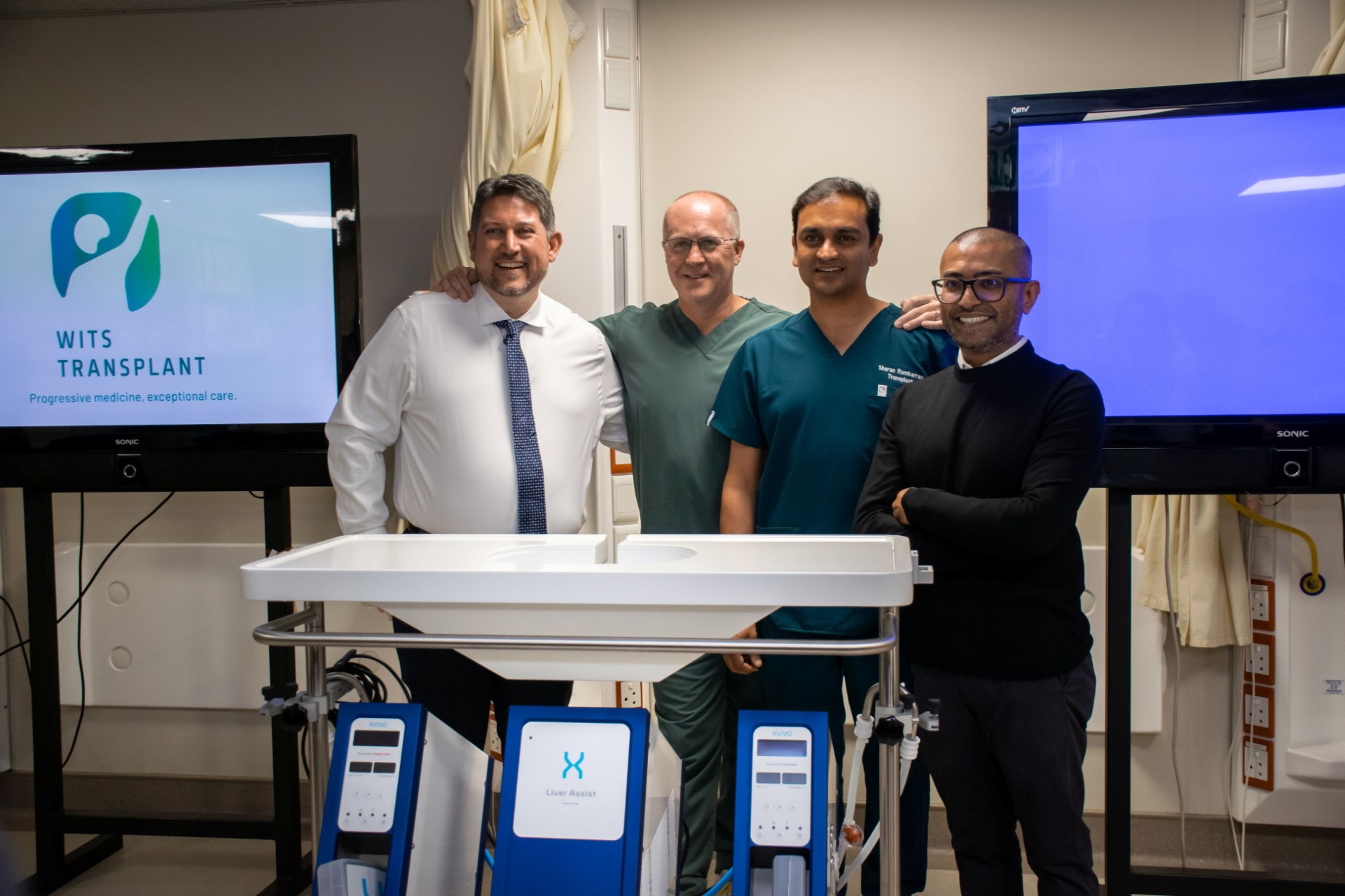
For thousands of people living with end-stage liver disease, receiving a transplant can mean the difference between life and death. In heartening news, the introduction of liver perfusion technology at Wits Donald Gordon Medical Centre marks an important milestone. It’s the first transplant centre in Africa to implement the technology, and the unit can now better preserve, assess, and even restore certain donor livers before transplantation. The outcome: more patients could receive the life-saving treatment they need.
What is liver perfusion technology?
In simple terms, this technology keeps donor livers viable outside the body while clinicians assess and actively improve the condition of the organ before a transplant. By allowing transplant teams to better maintain organ viability, the machine has the potential to increase organ utilisation, reduce complications, and improve transplant outcomes for patients who may otherwise not survive the wait.
According to Dr. Sharan Rambarran, lead liver transplant surgeon at Wits Donald Gordon Medical Centre, this provides a more advanced way of preserving donor organs. “We’re one of the busiest transplant units on the continent, certainly in sub-Saharan Africa. What liver perfusion offers us is a better way to store the organ outside of a human body, while also giving us the opportunity to resuscitate that organ.”
This is particularly important in South Africa where available donor organ numbers remain low. Because suitable donor livers are so scarce, transplant teams often have to consider organs that carry a higher degree of risk. Essentially, rather than replacing the need for organ donation, the technology helps make better use of the precious donor organs that are already available.
How does liver perfusion technology improve transplant decisions?
Before a donor liver is transplanted, experts assess its quality, using internationally recognised scoring systems. Some organs are cleared for transplantation, while others are unsuitable/damaged. The challenge lies with the large number of organs that fall somewhere in between.
Dr. Dinen Parbhoo, medical gastroenterologist and hepatologist at Wits Donald Gordon Medical Centre, describes these as the “grey area” organs; livers that may still function, but carry enough uncertainty that using them could put a patient’s life at risk. “If you put a suboptimal organ into one of my patients and the organ doesn’t start working, the patient suffers and dies.”
Liver perfusion technology offers a more optimistic path. By connecting the liver to a specialised machine that delivers oxygen and nutrients, the transplant team can monitor how the organ responds outside the body. If the liver begins functioning well, it may be considered suitable for transplantation. If it fails to recover, they can concede it’s unlikely to provide a successful outcome.
Instead of relying solely on an initial assessment, the technology gives transplant teams additional (and vital) information to guide one of the most critical decisions in the transplant process.
For the team, improving the use of donor organs is one of the few factors they could directly influence. Unfortunately, public awareness of organ donation and people’s willingness to become donors remain significant challenges, thus liver perfusion technology provides an opportunity to make better use of the limited number of organs that are already donated.
The technology may not be able to solve South Africa’s organ shortage on its own, but it signals an important step toward increasing the number of donor livers that can safely be transplanted, giving more patients access to life-saving treatment.
South Africa needs more organ donors
South Africa has a severe shortage of donor organs. Across countries, healthcare systems measure the number of deceased donors per one million people. According to Dr. Rambarran, countries with some of the world’s most successful organ donation programmes, including Spain, the United States, and much of Europe, typically report between 40 and 60 deceased organ donors per million population.
By comparison, South Africa records fewer than one deceased organ donor per million people. Even at its highest point, the country reached only one to two donors per million. “If South Africa were to use those numbers, we should have in excess of 350 to 400 organ donors,” he explains.
The COVID-19 pandemic further affected organ donation rates, changing how critically ill patients presented to hospitals and how intensive care resources were managed. Reversing those trends has proved difficult, and South Africa continues to rank among the countries with the lowest reported deceased organ donation rates globally.
This shortage has expansive consequences. Every donated liver represents a rare opportunity for someone with end-stage liver disease to receive life-saving treatment. It is also why innovations such as liver perfusion technology are so significant.
What makes a suitable liver donor?
An ideal liver donor has a clearly established cause of death, is typically relatively young, and has few or no significant underlying medical conditions. While each donor is assessed individually, these factors are generally associated with a higher likelihood that the liver will function well after transplantation.
However, according to Dr. Rambarran, ideal donors are becoming increasingly uncommon. Instead, transplant teams often receive organs from older donors or patients who have experienced prolonged stays in intensive care, undergone multiple medical interventions, or developed complications such as infection.
These elements can affect the quality of the liver and increase the risks associated with transplantation. As a result, many donor organs are classified as “extended criteria” or marginal organs, meaning they call for far more careful evaluation before they can be considered suitable for transplant.
How liver perfusion helps maximise every donated organ
Dr. Rambarran says the majority of donor livers available to the unit fall into the extended criteria category. This is where liver perfusion technology shines.
Rather than relying on a single assessment, clinicians can use the perfusion system to evaluate how a donor liver functions outside the body. Some organs that would previously have been declined may recover sufficiently to become suitable for transplantation.
Using healthier organs ultimately benefits patients long after the operation. Better graft function is linked to shorter stays in intensive care, reduced time in hospital and improved long-term transplant outcomes. Although liver perfusion technology represents an additional upfront investment, Dr. Rambarran notes that it may also reduce healthcare costs over time by minimising the need for prolonged intensive care, dialysis, extended ventilation, and other complications associated with poor graft function.
Ultimately, the aim is to make every donated organ count, giving patients the best possible chance of a successful transplant while making the most of South Africa’s limited donor pool.
Who qualifies for a liver transplant?
While end-stage liver disease, including advanced liver cirrhosis, is the starting point for most liver transplant referrals, not every patient with liver failure will be eligible for transplantation. Patients undergo a multidisciplinary assessment before being placed on the transplant waiting list. This evaluation considers the severity of the liver disease, and if the patient is physically and medically able to undergo such a complex operation and recover successfully.
The assessment probes into heart, lung, and kidney function, alongside evaluations of the patient’s overall fitness, frailty, psychological wellbeing, and social support systems. Together, these factors help determine whether transplantation is the safest and most appropriate treatment option. “Everyone starts with end-stage liver disease,” explains Dr. Parbhoo. “But it’s about finding the right patient with the right illness who meets the eligibility criteria.”
Is there an age limit for a liver transplant?
Transplant teams look at a person’s physiological age; how healthy and physically resilient they are rather than simply their chronological age.
According to Dr. Parbhoo, two people of the same age can have vastly different levels of fitness and overall health. A patient in their late 70s who was active and physically fit before becoming ill may still be an excellent transplant candidate, while someone decades younger may be considered too frail to safely undergo the procedure. “We’ve had patients in their mid to late 70s who still qualified for liver transplantation, and we’ve had patients in their 40s who were too physically frail.”
The availability of donor organs also introduces an ethical element to transplant decisions. In countries where donor organs are more readily available, age may be less of a limiting factor.
Is a liver transplant covered by medical aid?
One of the biggest concerns: the potential cost. Dr. Parbhoo confirms that liver transplantation is generally covered by South African medical schemes as a Prescribed Minimum Benefit (PMB), if patients meet the necessary clinical criteria and follow the required approval processes. Medical schemes operate under nationally regulated protocols that require funding for certain life-saving treatments, including organ transplantation.
South Africa’s public healthcare system also offers liver transplant services, although the assessment process can take longer because of the demands on the public sector. Wits Donald Gordon Medical Centre works closely with Charlotte Maxeke Johannesburg Academic Hospital to provide liver transplantation for eligible state patients.
Patients are assessed through the public healthcare system, and, when appropriate, receive their transplant at Wits Donald Gordon Medical Centre before returning to Charlotte Maxeke for ongoing care. Dr. Rambarran says that the public and private programmes work as an integrated team, with clinicians trained within the same transplant programme and following the same clinical standards.
Perhaps most importantly, there is a single transplant waiting list for eligible patients. Once a patient has completed their medical assessments and meets the eligibility criteria for transplantation, they are placed on the waiting list according to the severity of their liver disease – not whether they are a state or private patient.
“If there’s a state patient who’s sicker, the state patient is next on the list,” says Dr. Rambarran.
How long does it take to recover from a liver transplant?
A liver transplant is a complex surgical procedure, and recovery requires time, patience, and ongoing medical support. Still, patients are encouraged to begin moving as soon as it is safe to do so. Dr. Parbhoo reports that most patients are assisted out of bed and walking within the first three to five days after surgery. Early mobilisation plays an important role in reducing complications and supporting the recovery process.
“The body does take a physical toll, but the aim is to be up and about within the first three to five days, walking around with some support.” While some people may require a longer period of recovery, Dr. Parbhoo notes that the quickest patient treated by the transplant unit was discharged just seven days after surgery.
Life after a liver transplant
Ultimately, the goal is for recipients to enjoy a normal quality of life once they have recovered from surgery. Patients will need to take lifelong immunosuppressive medication to prevent the body from rejecting the transplanted liver. These medications are carefully monitored and adjusted over time and can increase the risk of certain infections, making regular follow-up care an essential part of long-term health.
Long-term outcomes vary depending on the condition that caused the liver failure. Some liver diseases can recur after transplantation, while others are effectively cured with a new liver. As a result, life expectancy differs from patient to patient.
Overall, the outlook is encouraging. According to Dr. Parbhoo, around 73% of liver transplant recipients are alive five years after transplantation. More importantly, for patients with end-stage liver disease, transplantation offers a significant survival advantage.
“At the point of end-stage liver disease, transplant offers you more life and more quality of life,” he shares. For many patients, a liver transplant is about restoring independence, improving daily wellbeing, and the opportunity to return to family, work, and the activities they enjoy.
Changing the conversation around organ donation
Liver perfusion technology represents a reassuring advancement for transplant medicine, but both surgeons believe that the greatest opportunity to save lives lies beyond medical innovation.
South Africa continues to face a critical shortage of donor organs, driven in part by limited public awareness and persistent misconceptions about organ donation. Misinformation surrounding black-market organ trafficking, cultural beliefs, and religious concerns can discourage people from becoming donors, despite the strict ethical and legal safeguards that govern transplantation in South Africa.
“We need to debunk the myths that surround transplantation,” asserts Dr. Rambarran. “The more people understand what is possible, the more likely they are to consider organ donation.”
Raising awareness about conditions such as liver cirrhosis, kidney failure, and end-stage organ disease can help people understand why organ donation is needed and the life-changing impact it can have for recipients.
Dr. Parbhoo agrees that normalising conversations around transplantation is just as important as advances in medical technology. “People need to understand what transplantation is, what it offers, why we do it, and when it’s needed. The more it becomes part of everyday conversation, the less it becomes something that’s feared.”
If you’re considering becoming an organ donor, start by having a conversation with your family about your wishes. You can also learn more about liver transplantation and organ donation through Wits Donald Gordon Medical Centre’s official social media channels.
Images: Provided/Vecteezy